News

POSITION STATEMENT OF 15 CIVIL SOCIETY ORGANISATIONS ON THE “DRAFT SOCIAL CLIMATE PLAN OF THE REPUBLIC OF BULGARIA – JUNE 2025”
Civil society organisations call for a national methodology for identifying energy-poor households to prevent arbitrary criteria by municipalities
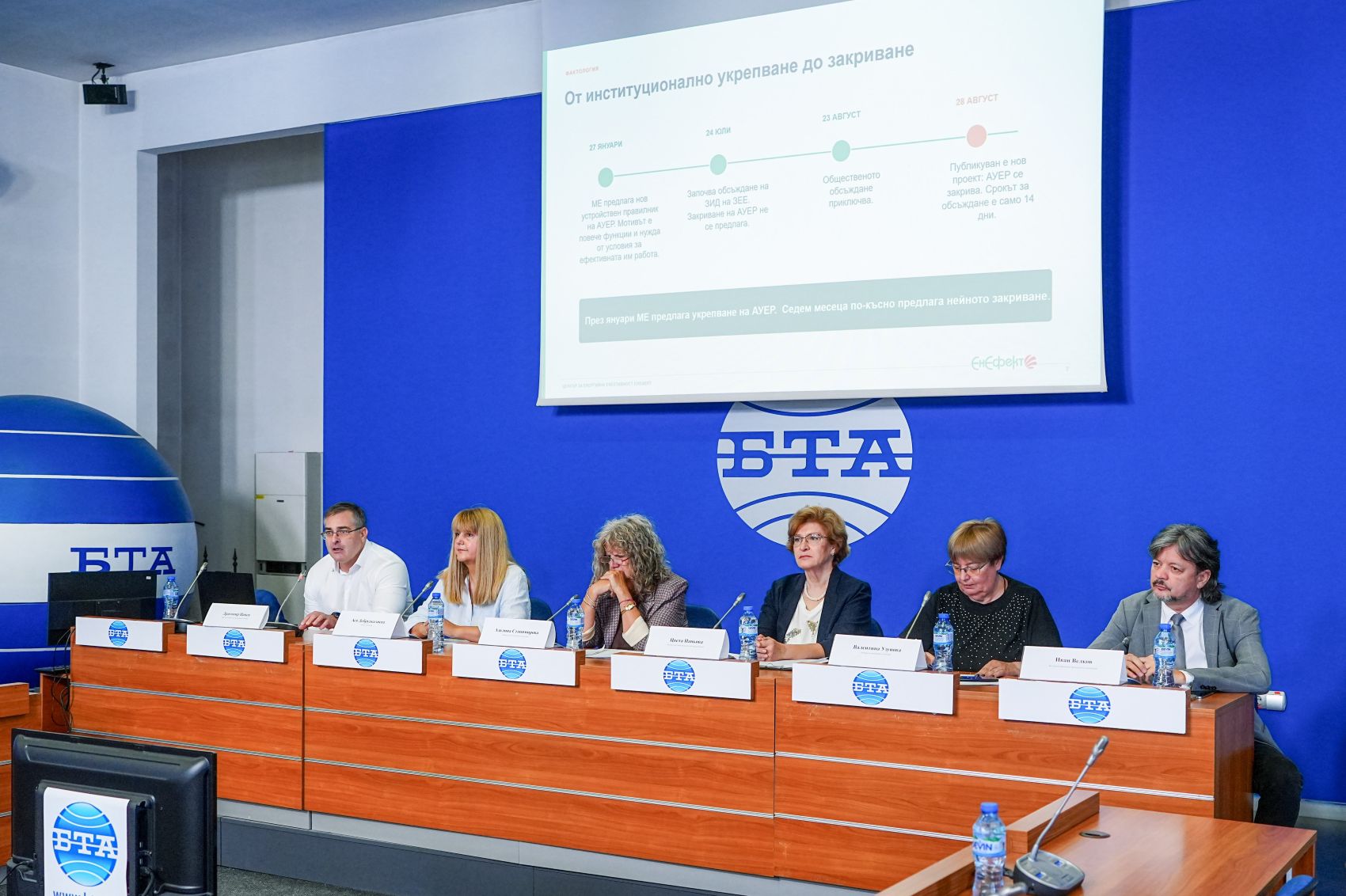
In the photo (from left to right): Dragomir Tzanev from the Center for Energy Efficiency EnEffect, PhD Teodora Peneva from the Institute of Economic Research at the Bulgarian Academy of Sciences (BAS), and Daniel Popov from the environmental organisation Za Zemiata. Photo: Lyubomira Filipova/BTA (LF).
At the National Press Club of the Bulgarian Telegraph Agency (BTA) in Sofia, 15 leading civil society, environmental and consumer organisations presented their joint position on the draft Bulgarian Social Climate Plan. During the discussion titled “Will the Social Climate Plan reach the most vulnerable?”, representatives of WWF Bulgaria, the environmental organisation Za Zemiata, the Center for Energy Efficiency EnEffect, the Active Consumers Association, Habitat for Humanity Bulgaria and others addressed several key questions: What are the shortcomings in the mechanism for allocating funds? What should be the role of municipalities, civil society and businesses in implementing the plan? What adjustments are necessary to ensure that the plan is fair, effective and implementable?
Fifteen civil society organisations call for the development and implementation of a national methodology for identifying energy-poor households, with the aim of harmonising the approach at the national level and preventing municipalities from applying arbitrary criteria. This recommendation is part of their joint opinion on the draft Bulgarian Social Climate Plan.
“We call on the government to allocate the budget under the Social Climate Plan based on a quantitative assessment of the impact of the scheme on target groups and to ensure transparency by publishing precise, clear and comprehensive information on the methodology for identifying energy-poor and transport-poor households,” said Dr. Teodora Peneva from the Institute of Economic Research at the Bulgarian Academy of Sciences. The experts’ recommendations were presented at a press conference held at the National Press Club of BTA in Sofia.
For the first time in Bulgaria, such a significant financial resource is envisaged – BGN 5 billion over a six-year period (2026–2032) – to be allocated to vulnerable households and enterprises.
“This is the funding coming to Bulgaria through the European fund, while our government will co-finance an additional 25%, meaning we are talking about a total of approximately EUR 3.3 billion over six years,” Peneva explained. According to her, the plan combines climate objectives with social justice and represents an important step in the Bulgarian government’s commitment to a socially fair transition.
According to Dragomir Tzanev from the Center for Energy Efficiency EnEffect, the financial resource is extremely substantial, but there is a risk that it may be invested inefficiently or unwisely.
“We see a serious risk that the funds may not reach the people for whom they are intended,” the expert commented. The problem, he explained, is that while a definition of energy poverty exists, there is no system in place to verify whether a household actually qualifies as energy poor. Within the framework of the plan, a preliminary solution is proposed – assigning local administrations the responsibility of identifying the recipients of the funds. However, municipalities currently have no regulated access to the relevant data and lack the capacity required for such assessments.
“We are witnessing an over-concentration of resources in central and local institutions on the one hand, and a lack of clear rules on the other,” Tzanev added. “The result is growing concern about the ineffective use of public resources.”
Daniel Popov from the environmental organisation Za Zemiata pointed out that essential elements are missing that would turn this budget into a coherent policy instrument aimed at improving the situation of Bulgarian citizens experiencing transport poverty, referring to the Transport component of the Social Climate Plan. The other two areas addressed in the plan are Buildings and Direct support measures.
Following the consultation process, the plan will be submitted to the European Commission, which may raise questions requiring clarification from the Bulgarian government, Popov explained in response to a question from BTA about whether changes to the current version of the plan are possible. The public consultation period ended on 20 July.
“We hope that after this process a second, final draft will be presented, which will also allow for further comments so that potential shortcomings can be addressed,” Popov said. According to him, this process is expected to last around six months, with the plan scheduled to begin implementation in January 2026.
The full text of the opinion is available here.
Source: BTA