News

ENERGY-EFFICIENT BUILDINGS ARE A KEY STEP TOWARDS A BETTER QUALITY OF LIFE
With deadlines for implementing the new rules approaching, limited coordination between institutions is slowing down progress
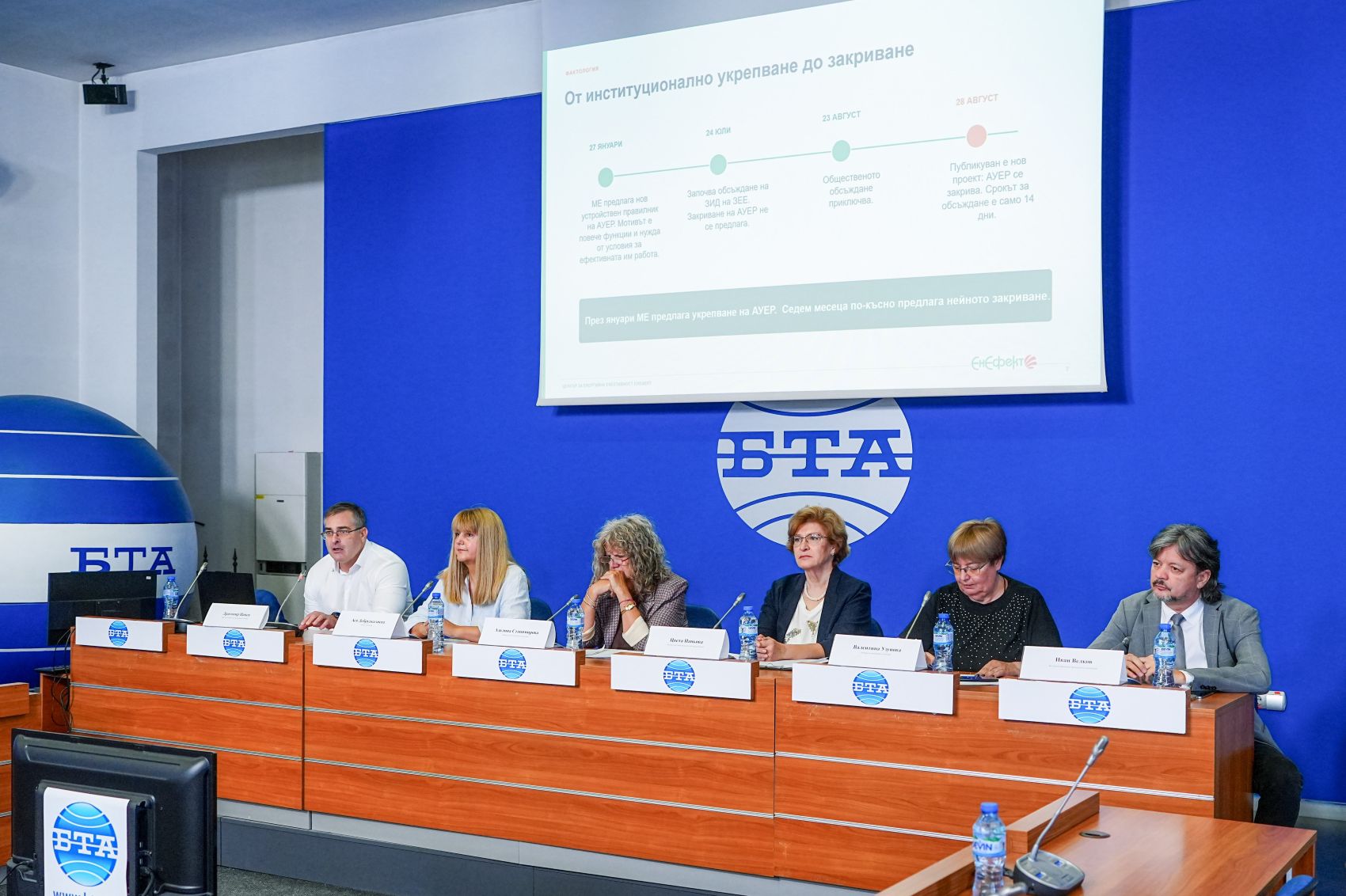
As the deadline for submitting a draft National Building Renovation Plan to the European Commission at the end of this year approaches, concerns about delays and weak institutional coordination are becoming increasingly evident. The national conference “Guidelines and Instruments for the Effective Implementation of the Energy Performance of Buildings Directive (EPBD)”, organised by the Center for Energy Efficiency EnEffect, the Bulgarian Association for Insulation in Construction (BAIS) and the Renovate Bulgaria Coalition, brought together policymakers, experts and business representatives for an open discussion on the challenges facing the country.
The forum highlighted not only the opportunities created by the new rules, but also the growing risk that Bulgaria could miss key deadlines. This could once again place the country in the familiar situation of adopting rushed decisions that are not sufficiently consulted with the professional community and are difficult to implement in practice. The National Building Renovation Plan – the strategic document intended to outline investments, standards for zero-emission buildings and support measures for households and businesses – is still at an early stage of preparation. Participants stressed that without strong cross-sector coordination and transparent public consultations, there is a real risk that the plan could become yet another bureaucratic exercise rather than a genuine roadmap for modernising the building stock.
“The role of buildings is often underestimated. It is time to speak more frequently about the effects of implementing the new rules and about the concrete measures that can improve conditions for end users. As a professional community, we must work together and propose sustainable solutions,” said Dragomir Tzanev, Executive Director of EnEffect.
Member of the European Parliament Tsvetelina Penkova added: “Renovating the building stock is not an end in itself. It is a tool for building a sustainable energy system and achieving social justice. Our main goal is to permanently reduce household energy bills and overcome energy poverty.”
Ivaylo Aleksiev, Executive Director of the Sustainable Energy Development Agency (SEDA), also highlighted two major challenges: “First, the concept of a ‘zero-emission building’ must be realistic and understandable for everyone. Second, preparing the National Renovation Plan requires analysing a vast amount of information. Energy efficiency is a horizontal policy that affects everyone – from households to the construction sector.”
The event also featured Silvia Rezessy from DG ENER, who presented data on the EU building stock. It covers 24 billion square metres, of which 74% are residential buildings. Approximately 85% of existing buildings were constructed before 2000, and 75% of them are energy inefficient.
“The new rules are already in force, and Member States must prepare their first national renovation plans by the end of 2025. Support from the European Commission is focused on building capacity and sharing best practices,” Rezessy emphasised.
The deadline for transposing most provisions of the EPBD is May 2026, but the first steps – including the draft National Building Renovation Plan – must be prepared and submitted for public consultation already this year. Without a decisive process led by public institutions, with strong involvement from the expert community and clear communication with citizens, Bulgaria risks not only falling behind European requirements but also missing the opportunity for building renovation to become a driver of economic growth, employment and social well-being.
A follow-up discussion with the Ministry of Regional Development and Public Works and the Ministry of Energy is planned for November. The main challenge will be to identify concrete priorities both in the investment policy and in key reforms related to the zero-emission building standard, energy performance certificates, and minimum energy performance requirements for building renovation.
Presentations
- Key provisions on zero-emission buildings and energy performance certificates – Sylvia Rezessy, DG Energy, European Commission
- Draft Guideline for a ZEB Definition Implementation – Fabio Zanghirella, ENEA
- Relationship between the implementation of the requirements of the EPBD and EED – Jiri Karasek, SEVEn
- EPBD.wise – Effective implementation of the EPBD in line with short-term and long-term policy requirements – Romane Faure, Efficient Buildings Europe
- EPC – Energy Performance Certificates – Tiago Marques, ADENE
- Energy audit and scenario for the effective renovation of the House of Europe building – Alexander Stankov, EnEffect